
Catalyzing Capital: How Stadium-Led Sports Tourism Can Unlock Private Investment in the Dominican Republic
January 30, 2026
The Dominican Republic is advancing a strategic shift to position sports tourism as a complementary growth engine to its traditional leisure tourism model. Recent policy announcements signal a clear intent to leverage international sporting events, athlete travel, and fan-driven visitation to create year-round demand, diversify visitor profiles, and increase average spend per visitor.
Within this framework, the proposed government-backed stadium development in Santo Domingo functions as anchor infrastructure rather than a standalone public asset. By underwriting core development risk and guaranteeing long-term event programming, the public sector materially de-risks adjacent private investment, creating conditions conducive to capital deployment across hospitality, food and beverage, entertainment, training facilities, and mixed-use real estate.
Global precedent demonstrates that stadium-led developments, when integrated into urban fabric and tourism strategy, act as investment catalysts. The presence of a major venue concentrates foot traffic, media exposure, and predictable demand flows—key variables that improve underwriting visibility for private investors. In Santo Domingo, these effects are amplified by existing advantages: the country’s largest urban population, established hotel base, international air connectivity, and role as the Dominican Republic’s cultural and commercial center.
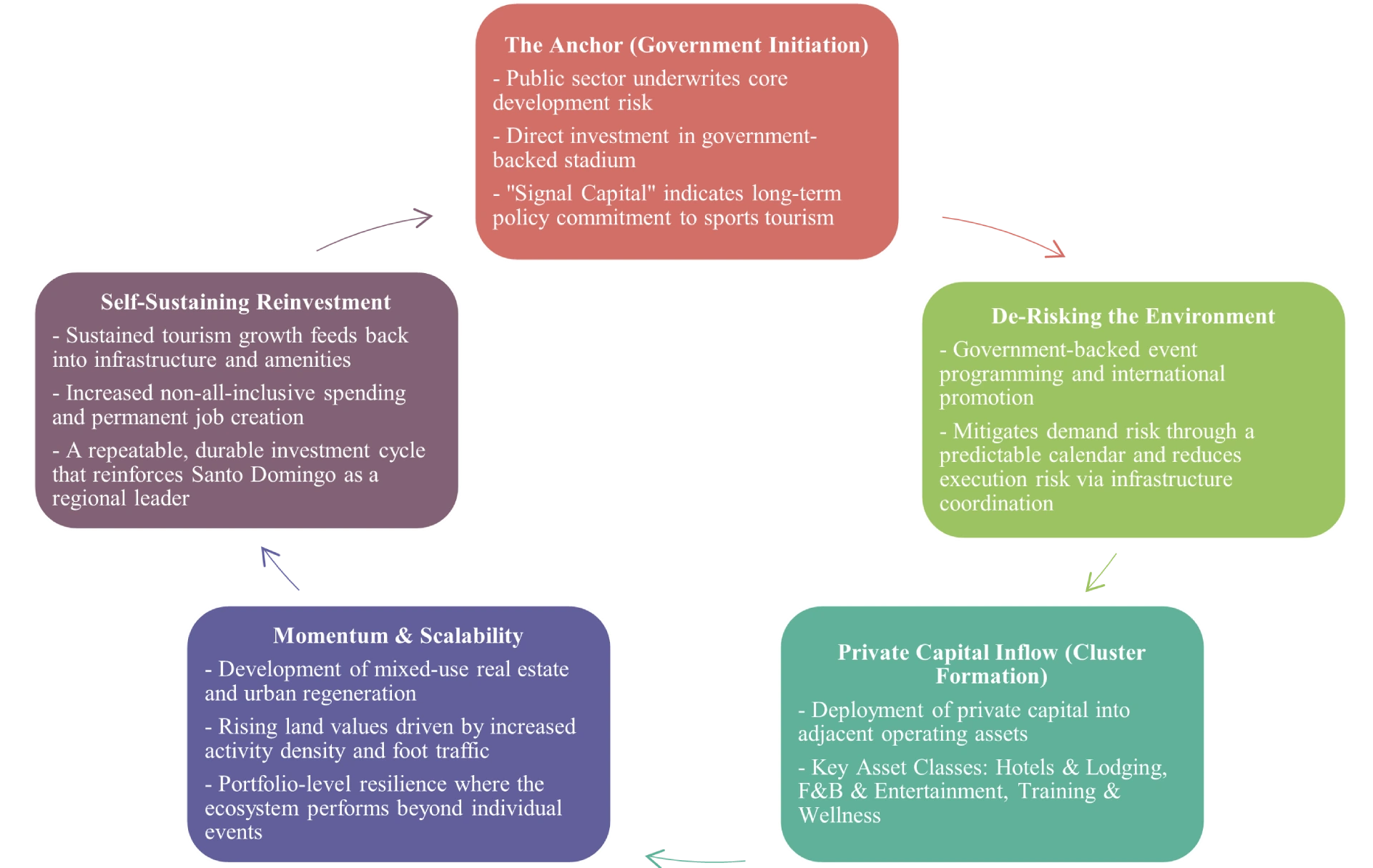
From an investment perspective, the stadium enables the formation of a sports tourism cluster rather than isolated projects. Hotels benefit from event-driven occupancy smoothing; restaurants and entertainment venues capture pre- and post-event spend; training and wellness facilities monetize athlete and team travel; and mixed-use developments capture rising land values driven by increased activity density. This clustering effect transforms public investment into a crowd-in mechanism for private capital, rather than a substitute for it.
At the macro level, a stadium-led sports tourism hub supports broader economic objectives: extending length of stay, increasing non-all-inclusive spending, generating construction and permanent employment, and reinforcing Santo Domingo’s positioning as a regional events destination. Over time, this creates a self-reinforcing investment flywheel, where public infrastructure anchors demand, private capital scales amenities, and tourism growth sustains reinvestment.
Strategic takeaway: A government-backed stadium in Santo Domingo should be viewed not as a venue, but as a platform asset—one capable of anchoring a scalable sports tourism ecosystem and unlocking sustained private investment across multiple real asset and operating sectors.
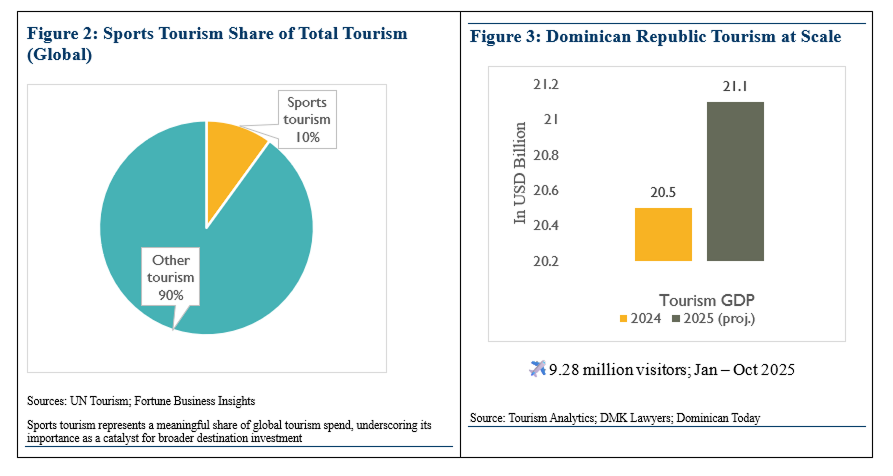
Major sports venues increasingly function as anchor infrastructure within broader urban and tourism development strategies. When backed by government commitment, stadium projects move beyond single-purpose facilities and become platform assets that materially reduce risk for surrounding private investment. This de-risking effect is central to the logic of stadium-led sports tourism clusters.
Academic and policy research on sports-led regeneration shows that flagship venues can catalyze wider economic activity by concentrating foot traffic, infrastructure investment, and media exposure in a defined geography. Rather than generating value in isolation, stadiums serve as focal points around which hospitality, entertainment, retail, and mixed-use real estate can cluster, improving demand visibility and underwriting confidence for private capital.
Government sponsorship plays a decisive role in this model. Public participation—whether through funding, land assembly, infrastructure provision, or long-term event programming—functions as signal capital, indicating policy alignment and long-term commitment. For private investors, this reduces several key risks simultaneously:
- Demand risk, through a predictable calendar of events and tournaments
- Execution risk, via public coordination of permitting, transport, and utilities
- Market risk, through international promotion and brand visibility
This dynamic is evident in established global examples. The Northumberland Development Project in London integrated the Tottenham Hotspur Stadium into a broader mixed-use regeneration plan, combining hospitality, retail, residential, and entertainment uses around a high-capacity venue. While direct economic impacts of stadiums alone can vary, mixed-use, stadium-anchored districts have consistently attracted private participation due to sustained footfall and diversified revenue streams.
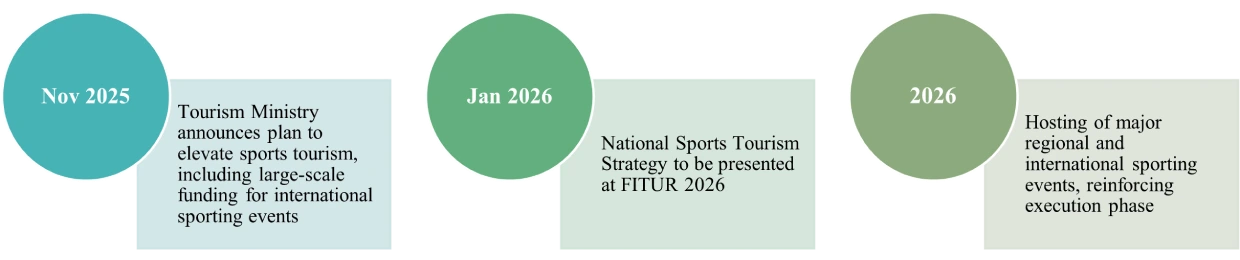
The Dominican Republic is now explicitly positioning sports tourism as part of its national tourism and investment strategy. The Ministry of Tourism has announced a plan to elevate sports tourism, including large-scale funding for international sporting events and promotion, reinforcing the role of sports infrastructure as an economic development tool. This strategy is set to be formally presented at FITUR 2026, signaling continuity and international visibility for the policy agenda.
Crucially, this policy momentum reframes a potential new stadium in Santo Domingo as more than a venue. Within a government-backed framework, the stadium becomes the anchor asset around which private investment in hotels, food and beverage, entertainment complexes, and training facilities can be structured with lower perceived risk. The public sector effectively absorbs early-stage uncertainty, allowing private capital to deploy into adjacent assets with clearer demand drivers.
For investors, the relevance of the stadium lies not in gate receipts alone, but in its ability to stabilize and concentrate demand across an ecosystem of complementary assets. In this sense, the stadium operates as a de-risking mechanism and demand generator, transforming public infrastructure spending into a catalyst for private investment and setting the foundation for a scalable sports tourism cluster in Santo Domingo.
Figure 4: Stadium as Anchor Infrastructure De-Risking Private Investment
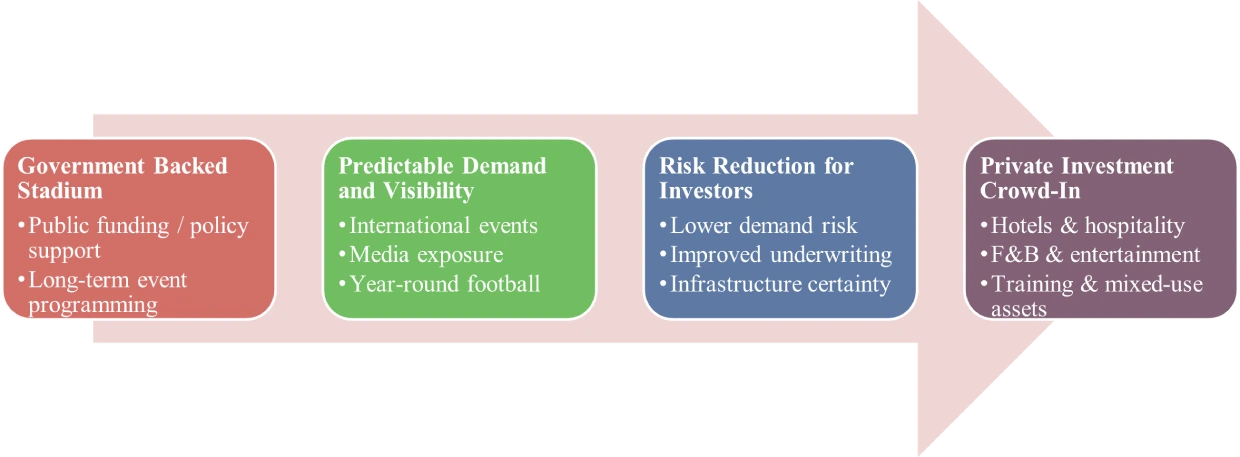
Figure 5: Dominican Republic Sports Tourism Policy Momentum
The primary economic value of a government-backed stadium lies not in the venue itself, but in its ability to catalyze a cluster of complementary private investments. When sports infrastructure is embedded within a broader tourism and urban strategy, it creates a sports tourism ecosystem in which multiple asset classes benefit from shared demand drivers, predictable footfall, and rising destination visibility.
Unlike isolated hospitality or entertainment projects, stadium-anchored developments benefit from demand aggregation. Major sporting events concentrate visitors—athletes, teams, officials, media, and fans—within defined time windows, creating spikes in local consumption that adjacent assets can reliably capture. Over time, a recurring event calendar transforms episodic demand into a repeatable revenue base, improving underwriting visibility for private investors.
This clustering dynamic typically unlocks private capital across four core categories:
- Hotels & Accommodation: Event-driven demand supports higher occupancy outside traditional leisure peaks, particularly for mid-scale, extended-stay, and athlete-oriented hotels. This demand smoothing reduces seasonality risk and improves yield stability.
- Food, Beverage & Entertainment: Restaurants, nightlife, fan zones, and experiential venues capture pre- and post-event spend, benefiting from high visitor density and longer dwell times. These assets are often among the first private investments to follow anchor infrastructure due to lower capital intensity and faster ramp-up.
- Training, Wellness & Sports Services: Modern sports tourism extends beyond spectators. Training facilities, sports medicine centers, wellness clinics, and academies monetize team travel, preseason camps, and athlete preparation, creating year-round demand that is less sensitive to single events.
- Mixed-Use & Urban Regeneration Assets: Over time, increased activity density and improved infrastructure support mixed-use developments that combine residential, retail, office, and hospitality functions. Rising land values and improved perceptions of place underpin longer-term real estate investment.
From an investment perspective, sports tourism clusters exhibit several characteristics that are attractive to private capital. First, shared demand drivers allow multiple assets to benefit from the same visitor flows, reducing reliance on a single revenue source. Second, public investment in anchor infrastructure lowers early-stage uncertainty, enabling private projects to be developed with clearer assumptions around access, utilities, and visibility. Third, the presence of diverse but interlinked uses increases the resilience of the overall ecosystem, as performance is not tied to one asset or event type.
In Santo Domingo, these dynamics are reinforced by structural advantages: the country’s largest population center, an established hospitality base, strong air connectivity, and the Dominican Republic’s role as a cultural and commercial hub. Within this context, a stadium-anchored sports tourism cluster can evolve from initial hospitality and entertainment investments into a self-reinforcing development platform.
The transition from a single venue to a sports tourism cluster represents a shift from project-level economics to ecosystem economics. For private investors, this creates opportunities to deploy capital across multiple entry points—operating businesses, real assets, and mixed-use developments—while benefiting from the same underlying demand engine. In this sense, the stadium acts as the nucleus of a broader private investment cycle, rather than the end point of public spending.
The success of a stadium-anchored sports tourism strategy depends on the strength of the urban platform that surrounds it. In this regard, Santo Domingo offers the Dominican Republic’s most de-risked environment for private investment, combining scale, connectivity, and existing tourism infrastructure.
As the country’s largest metropolitan and commercial center, Santo Domingo concentrates population, income, hotel inventory, and food-and-beverage activity. This existing base allows sports tourism to function as an accelerant to demand, rather than requiring the creation of a new market. Strong air connectivity and transport links further support the city’s ability to host recurring sporting events and associated media activity, transforming a stadium from an occasional venue into a reliable demand generator.
Public backing of stadium development materially reduces investment risk. Government participation helps mitigate demand risk through event programming, lowers execution risk via infrastructure coordination, and enhances market visibility through international promotion. For private investors, this reduces early-stage uncertainty and improves underwriting confidence for adjacent assets.
Importantly, the clustering of multiple asset types around a stadium—hotels, restaurants, entertainment venues, training facilities, and mixed-use developments—creates portfolio-level resilience. These assets draw from overlapping demand segments while remaining diversified, allowing the ecosystem to perform even when individual events fluctuate.
In Santo Domingo, a government-backed stadium should be viewed as a platform asset, not a standalone project. The city’s scale, infrastructure, and policy alignment enable stadium-led development to crowd in private capital, supporting a durable sports tourism cluster with multiple entry points for investors.
The alignment of a national sports tourism initiative with a potential government-backed stadium in Santo Domingo represents a structural opportunity to catalyze private investment, rather than a standalone infrastructure project. Viewed through an investment lens, the stadium functions as platform infrastructure—anchoring demand, concentrating activity, and reducing risk across a broader ecosystem of assets.
Government sponsorship of stadium infrastructure materially lowers early-stage risk by underwriting demand visibility, infrastructure coordination, and international promotion. This public commitment improves underwriting certainty for private investors and enables capital deployment into adjacent assets with greater confidence.
Sports tourism complements traditional leisure travel by extending length of stay, increasing per-visitor spend, and smoothing seasonality. Event-driven visitation creates repeatable demand patterns that support hotels, food and beverage venues, entertainment assets, and ancillary services throughout the year.
The primary investment upside lies in cluster formation, not individual assets. Stadium-anchored ecosystems allow multiple asset classes to benefit from shared demand drivers, improving resilience and shifting the focus from single-project performance to portfolio-level outcomes.
Santo Domingo’s urban scale, connectivity, and existing hospitality base position it as the Dominican Republic’s most de-risked environment for stadium-led private investment. The city enables sports tourism to scale efficiently, converting public infrastructure into a durable private investment flywheel.
For private capital, the opportunity extends beyond venue-related revenues to include hospitality, entertainment, training and wellness facilities, and mixed-use real estate—each supported by a common demand engine. Phased investment strategies allow early participation in operating assets, followed by larger-scale real estate and institutional capital as cash flows stabilize.
For policymakers, the implication is equally clear: aligning stadium development with sports tourism policy maximizes economic impact by transforming public investment into sustained private-sector activity, job creation, and urban regeneration.
A government-backed stadium in Santo Domingo should be understood as a catalyst asset—one capable of anchoring a true sports tourism cluster and unlocking durable private investment. Executed within a coherent policy and urban framework, this model positions the Dominican Republic to capture higher-value tourism, attract long-term capital, and reinforce its leadership in Caribbean sports tourism.